


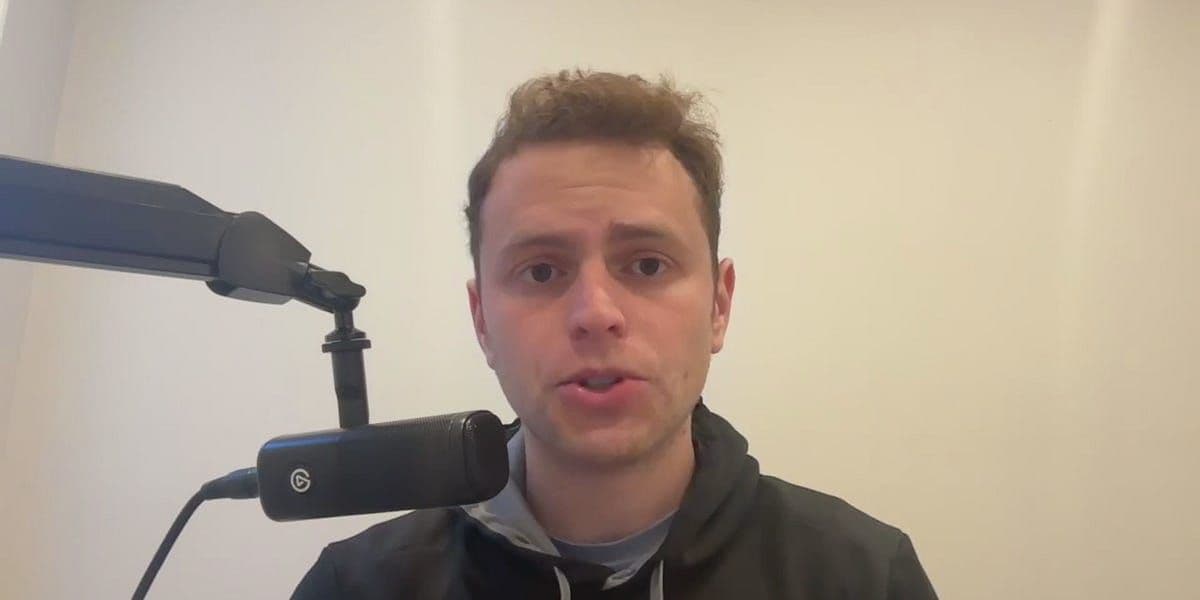
Good morning, everyone. Overnight, the Washington, D.C. National Guard began openly carrying firearms—a dramatic escalation in Trump’s federal takeover of the capital. This comes as word spreads of a major demonstration planned for today, which I’ll be covering live and on the ground (don’t worry, I’m taking precautions).
Meanwhile, just minutes ago, Kilmar Abrego Garcia was arrested again at his ICE check-in and now faces deportation to Uganda in what activists call a brutal test case of Trump’s immigration crackdown.
All of this underscores why I’m doubling down: I’m investing heavily in Substack and expanding this operation to rival the mainstream media. My goal is simple—to bring you unfiltered, live, and on-the-ground reporting when the stories that matter most break, anywhere in the country.
But I can’t do this without you. Subscribe today to support journalism at a time when social media platforms are silencing independent voices. Together, we will fight back—and we will win.
Subscribe
With that, here’s the news:
- Donald Trump has been accused by Illinois leaders and Democrats of “turning the military on American citizens” with a plan to deploy National Guard troops to Chicago, which they denounce as unrequested, politically motivated, and strategically unwise.
- National Guard troops deployed to Washington, DC, under Donald Trump’s anti-crime agenda have begun carrying sidearms following a directive from Defense Secretary Pete Hegseth, marking a significant escalation in federal control of the city’s policing despite overall crime being lower than last year.
- This morning, ICE arrested Kilmar Abrego Garcia during his Baltimore check-in as he filed a new federal habeas corpus lawsuit in Maryland, challenging the Trump administration’s plan to deport him to Uganda.
- Over the weekend, Abrego Garcia, a Maryland father unlawfully deported to El Salvador earlier this year, appeared at a Baltimore rally as the Trump administration warned it may deport him to Uganda this week, with supporters denouncing the case as political retaliation for challenging the administration’s deportation practices.
- Donald Trump threatened to reopen investigations into former New Jersey governor Chris Christie over the 2013 “Bridgegate” scandal after Christie criticized him on ABC News for weaponizing the Justice Department, highlighting the breakdown of their onetime alliance and Trump’s broader use of federal law enforcement against critics.
- France summoned U.S. ambassador Charles Kushner after his letter to President Emmanuel Macron accused France of failing to combat antisemitic violence.
- The U.S. has confirmed its first human case of the flesh-eating screwworm parasite, traced to recent travel in Central America, with health officials stressing the public risk is low but agriculture leaders warning of major economic threats; the government has launched a plan to drop billions of sterile flies over Texas and Mexico to stop the pest’s spread.
- Russian foreign minister Sergei Lavrov praised Donald Trump’s peace efforts, while U.S. vice president JD Vance said Washington would continue trying to broker talks.
- Donald Trump and allies have escalated a “pattern of lawfare” by targeting political opponents with unverified mortgage fraud allegations, now pressuring Federal Reserve governor Lisa Cook—appointed in 2022 and serving a 14-year term—to resign, while critics warn this selective weaponization of the legal system mirrors authoritarian tactics in Hungary, Turkey, and Russia.
- Donald Trump is set to sign an executive order cracking down on flag desecration, directing the Justice Department to prosecute violators and pursue limits on First Amendment protections, while also allowing immigration penalties for non-citizens involved in flag burning—part of his broader push to promote patriotism amid recent anti-Israel and anti-ICE protests.
- Over the weekend I interviewed Congressman Greg Landsman from Ohio who spoke about his redefined vision for the Democratic Party’s future:
- Donald Trump is hosting South Korean President Lee Jae Myung at the White House for talks on trade, North Korea, and regional security, marking Lee’s first U.S. visit since taking office in June after Yoon Suk Yeol’s removal, with discussions expected to focus on tariffs, South Korean investment, North Korean missile tests, and rising tensions over Taiwan.
- The U.S. Justice Department alleges Smartmatic executives funneled money from a 2018 Los Angeles voting machine contract into slush funds tied to bribery schemes.
- Israeli strikes on Nasser Hospital in Khan Younis, southern Gaza, killed more than a dozen people—including journalists and medical staff—after back-to-back “double-tap” attacks, drawing condemnation from Palestinian officials, press organizations, and the UN, while Israel acknowledged a strike in the area but denied directly targeting journalists.
- Following Donald Trump’s lead, Israeli Prime Minister Benjamin Netanyahu has shifted to demanding a comprehensive ceasefire deal that secures all hostages’ release and ends the Gaza war on Israel’s terms, while simultaneously preparing a major assault on Gaza City—drawing criticism from mediators, hostage families, and analysts who warn the dual strategy prolongs the conflict and mirrors Trump’s hardline stance against Hamas.
- Jerry Adler, veteran Broadway stage manager turned actor best known for playing mob associate Hesh Rabkin on The Sopranos, has died at 96 after a long career that included work on the original My Fair Lady and acting roles beginning in his 60s.
Good news:
- Craig Clark, a 79-year-old retired technician known as the “Tech Fairy,” has rebuilt and donated over 700 laptops to people in need across Sarasota, Florida, funding upgrades himself and turning community donations of old computers into a grassroots project that has earned national recognition and changed countless lives.
- Researchers at UC San Diego have developed a promising low-cost cancer immunotherapy using the cowpea mosaic virus (CPMV), which activates human immune cells to attack tumors and build long-term anti-cancer memory; the plant-based treatment, effective in animal models and canine patients, is now moving toward clinical trials as a scalable alternative to costly therapies.
See you this afternoon.
— Aaron