


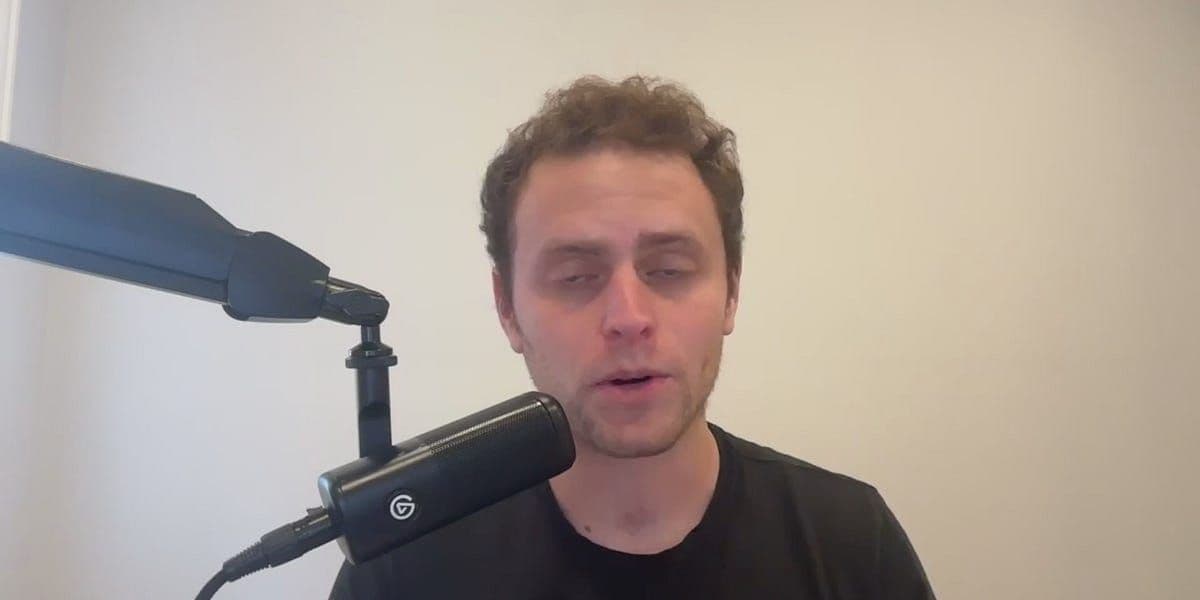
I just got home from the Washington, D.C. No Kings Day Protest, and what happened today was nothing short of historic. Organizers confirmed that more than 200,000 people filled the streets of the capital, officially making it the largest protest of the Trump era. That number alone is remarkable, but it only tells part of the story. What mattered most was the energy, the unity, and the fact that the entire event was completely peaceful.
Something unexpected happened recently: several people, Republicans and Independents alike, approached me to say thank you for what we’re doing. Others told me their non-political friends and family now watch our channel regularly. That’s when it hit me: we are breaking through. Why? Because facts are not partisan. The truth is not partisan.
This isn’t an echo chamber. This is a movement built by you. I can’t do it alone. Let’s take this momentum and reach every household in America. Subscribe today to support this work and keep it growing.
Subscribe
From early morning, people began arriving from every direction. The city was alive with a quiet kind of determination. Families walked together carrying homemade signs. Students chanted as they marched. Veterans, retirees, and young children all took part. The mix of ages, races, and beliefs created a sense of togetherness that you could feel in the air.
Despite the enormous crowd, the protest remained calm and orderly. Police lined the streets, but there was no tension between officers and demonstrators. There were no reports of violence or property damage. Instead, there was cooperation and respect. People moved carefully through intersections, helped one another find their groups, and shared water and food. It was a powerful reminder that protest can be loud without being chaotic, and strong without being destructive.
What made the day even more remarkable was that it wasn’t confined to Washington. The No Kings Day movement had already gone global by the time the first speakers took the stage. Before dawn on the East Coast, rallies had already been held across Asia, Australia, and Europe. Organizers said that more than 800 demonstrations had taken place worldwide before the U.S. even woke up.
By midday, the movement had spread across all fifty states. Millions of Americans joined local marches in big cities and small towns. People turned out in Chicago, Los Angeles, Atlanta, Seattle, Denver, and dozens of other places. Even rural communities held small but spirited gatherings. Organizers said that thousands of additional events were still planned for later in the day, making it one of the largest coordinated protests in modern U.S. history.
At the Washington rally, I had a chance to speak with Senators Adam Schiff and Cory Booker, both of whom attended the event. They spoke about the meaning of the day and the importance of keeping political activism peaceful. Each emphasized that democracy depends on citizens who care enough to show up.
Their presence was met with cheers from the crowd, not because of partisanship, but because they represented people who still believe in civic duty. Seeing elected officials walk through the same streets as ordinary Americans created a sense of shared purpose that few political events achieve.
Interview with Senator Schiff:
Interview with Senator Booker:
The message of the protest was clear. Participants gathered to stand up for democratic values and to express concern over what organizers described as attacks on free speech and constitutional rights.
The movement was meant to reject the idea of unchecked executive power and to remind leaders that the United States does not belong to any one person. It belongs to its citizens. Signs throughout the crowd carried phrases like “Power to the People” and “No Kings, Only Voters.”
Protests continued across the country throughout the day. In city after city, reports described similar scenes of peaceful gatherings, speeches, and music. Communities that rarely see mass demonstrations joined in. Many participants said they came not out of anger but out of hope — the hope that collective action could steer the country back toward accountability, decency, and respect for law.
The political backdrop added weight to the day’s events. Organizers framed the protests as a direct response to what they called government efforts to suppress dissent and limit free expression. Critics accused demonstrators of being disruptive or unpatriotic, but the tone on the ground told a different story. What unfolded in Washington and across the world was not hostility, but determination.
Security was heightened in many areas. Several governors activated the National Guard, and federal agencies increased their presence in major cities. Despite those measures, the marches remained peaceful. There were no widespread arrests or major incidents reported, even in cities where officials had prepared for unrest.
As the day went on, it became clear that No Kings Day was more than a protest. It felt like a moment of civic renewal. People weren’t just marching against something; they were marching for something. They were marching for fairness, for truth, and for the belief that democracy still matters.
When the crowd in Washington finally began to thin and the chants faded, there was still a hum of energy in the air. Strangers hugged, people exchanged phone numbers, and volunteers handed out leftover signs. It felt like the end of a long, hopeful day — one that reminded everyone there that power in a democracy comes from participation, not fear.
As I walked away from the National Mall, the message echoed from every direction. America has no kings. The people are the power, and today they proved it.
Look at some videos from today:
Boston:
San Diego: