


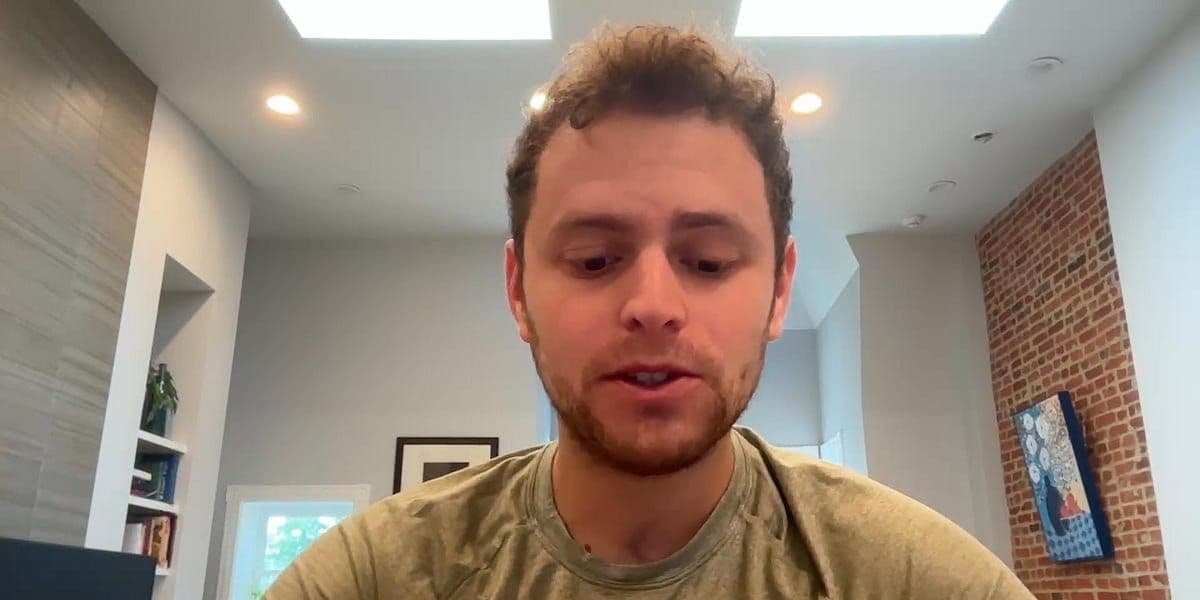
Good morning everyone! As is our Sunday tradition, here’s your good news only update to start the day. In a world that feels increasingly filled with hate and division, I believe it’s important to shine a light on the stories that inspire hope and resilience.
Today, I also want to share an important programming update. This afternoon, I’ll be interviewing another courageous survivor of Jeffrey Epstein’s horrific crimes. Their stories deserve to be heard—one by one, without distortion or silence. I ask you not just to watch, but to share these voices widely, because the world needs to hear them.
Make no mistake: there are powerful people and platforms who would love nothing more than for me to go quiet. They’ve tried, and they will keep trying. But I refuse. I will not allow them to tear down what we’ve built together—an independent platform rooted in truth, sustained by you and your support.
This community has made us the number one news Substack in the world for more than four months. That’s not an accident. It’s because we dare to do what few others will: confront the powerful and tell the stories that must be told.
If you believe in this mission, I ask you to stand with me. Subscribe, share, and keep this platform strong. Together, we’re not just reporting the news—we’re making history.
Subscribe
With that, here’s all the good news you missed:
- Chris Kolstad, owner of Pizza Man in Columbia Heights, Minnesota, went viral after offering free food to people he saw eating from his dumpster—raising over $4,000 in donations, partnering with local businesses, and helping nearly 100 people facing food insecurity while also supporting a local food shelf serving record numbers in the community.
- A viral TikTok from Tanganyika Wildlife Park shows baby pygmy hippo Mars refusing to leave the pool until his mom, Posie, gave him the classic “mom stare,” instantly ending the standoff and delighting millions who compared the scene to a toddler obeying their parent’s unspoken authority.
- Logan Smallwood, a lifelong train enthusiast from County Durham, UK, has become one of the youngest licensed train drivers in the country at 18, fulfilling his childhood dream after graduating from Newcastle College Rail Academy and volunteering on the Weardale Railway Line.
- After beating cancer, 63-year-old Krystyna Locke—who spent thousands on hospital parking during her 20-year battle with lymphoma—now fundraises and personally hands out free parking vouchers to patients at the London Health Sciences Center in Ontario, easing their burden while raising over $5,000 and turning her birthday into a yearly tradition of giving back.
- 29-year-old Brooke Johnson became the first woman to skateboard across the U.S., completing a 3,226-mile, 119-day journey from California to Virginia in honor of her late stepfather, raising $50,000 for spinal cord research while carrying his ashes in a necklace and drawing strength from his unwavering belief in her.
- South Korean researchers created a compact 3D-printing “glue gun” that can quickly print antibiotic-infused bone grafts directly onto fractures during surgery, conforming to jagged edges, reducing operation time, preventing infection, and promoting natural bone regrowth.
- A Virginia-based Veteran Farmers Training Program at the Arcadia Center for Sustainable Food helps veterans and military spouses transition to civilian life by teaching them agriculture, offering purpose, healing from PTSD, and new career paths, while also addressing the nation’s farmer shortage and growing demand for local, sustainable food.
- In southwest China, a group of strangers formed a human wall in a raging river to block the current and successfully rescue a young boy trapped between rocks, with Xiao Feng ultimately freeing him after multiple attempts—an act of bravery that quickly went viral on social media.
- Biologists in Mexico rediscovered the Omiltemi cottontail rabbit—a species unseen since 1904 and feared extinct—after a five-year search in the Sierra Madre del Sur, confirming its survival thanks to local knowledge and conservation efforts, making it the 13th species found from Re:Wild’s “25 Most Wanted” list.
- Dr. Alfred DiStefano was reunited with his Fordham University class ring 56 years after losing it in the Long Island Sound, thanks to metal detector hobbyist David Orlowski, who tracked him down through a reunion Facebook group and returned it instead of selling it—an act DiStefano called a miracle.
- An Argentine traveler named Flor accidentally booked an Airbnb in Castel San Lorenzo, Italy, that turned out to be her father’s childhood home; the hosts confirmed their family had purchased the house from her grandparents, helping her reconnect with her family history in an extraordinary coincidence.
- England’s NHS is rolling out an AI brain-scanning tool that speeds up stroke diagnosis—already used on 60,000 scans—helping doctors make quicker treatment decisions and enabling over half of stroke patients to recover.
- Mexico’s jaguar population has risen 30% since 2010 to over 5,300, thanks to expanded protected areas—yet conservationists warn the species still faces threats from poaching and habitat fragmentation and will need decades more recovery to escape endangerment.
- A Denver neurosurgeon performed a rare, high-risk surgery that gave former paramedic Russell McKeehan, paralyzed for years after multiple accidents, the chance to walk his daughter down the aisle at her upcoming wedding, with doctors praising his extraordinary determination and recovery progress.
- Scientists at the University of Life Sciences in Poznań are developing the world’s first goat-inspired forestry robot, designed to navigate steep terrain like an Alpine chamois while performing tasks such as tree inventories, species counts, tick collection, and even archaeological surveying, with the first prototype expected by 2026 and a full model before 2030.
- A clinical trial in Germany found that azelastine, a common over-the-counter nasal spray for allergies, significantly lowered Covid infection rates—2.2% versus 6.7% in a placebo group—suggesting it could serve as an affordable preventative tool, though experts stress it is no substitute for vaccines and more research is needed, especially in older or high-risk populations.
See you this evening.
— Aaron