


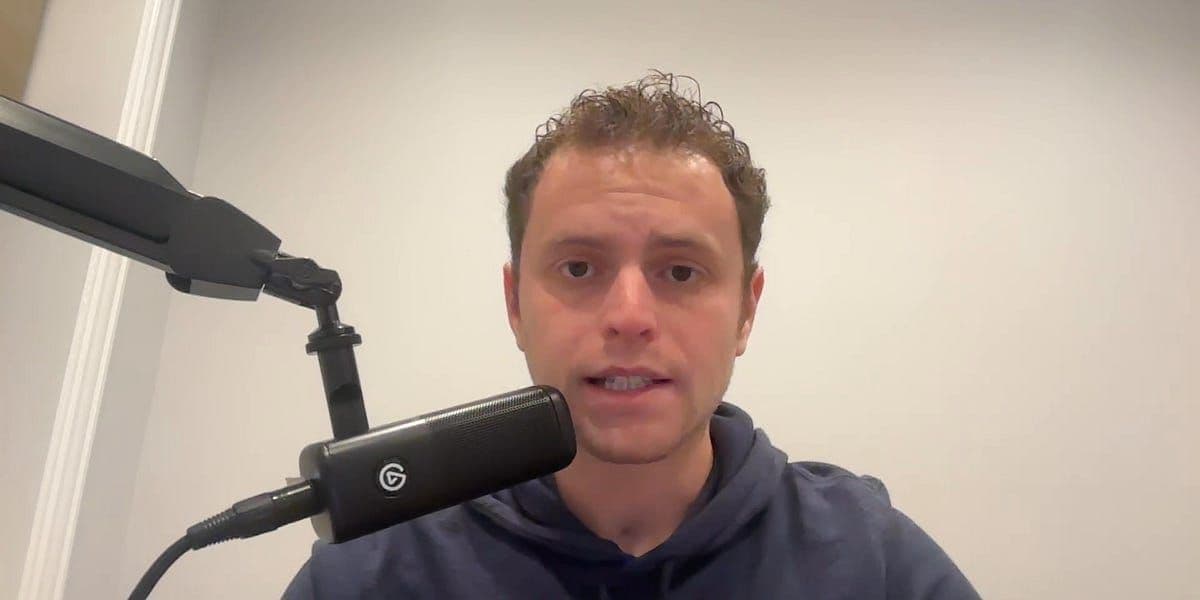
Good evening, everyone. As this turbulent week comes to an end, we find ourselves at a critical moment in our nation’s history. Over the past few days, we witnessed the horrific shooting of National Guard members in Washington, D.C.; watched a president in visible decline hurl a slur at a sitting governor; and learned of deeply troubling reports that the United States military may have violated international law in a Caribbean strike that left two individuals clinging to a burning vessel. The stakes could not be higher.
Before I continue, I ask that you subscribe if you can. I’m committed to cutting through the chaos. My reporting will remain clear, accurate, and grounded in fact—no matter how much noise is out there. While others try to manipulate the narrative, I’ll keep doing what I do best: delivering honest reporting you can trust. Please consider subscribing to support my work. Now more than ever, I need your help to fight back:
And amid all of this, there’s a critical story almost no one is talking about—one that strikes at the heart of journalism itself. In a moment of national crisis, the President of the United States has launched a series of personal, demeaning attacks on female reporters. As a journalist, I cannot remain silent about that.
Over the past week alone, the president has called one female reporter “piggy,” labeled another “ugly on the inside and out,” and most recently mocked a third as “stupid.” Equally disturbing is the silence surrounding these incidents—the absence of public solidarity from male journalists who stood by as their colleagues were demeaned simply for doing their jobs.
First, during an exchange on Air Force One, the president snapped at Bloomberg White House correspondent Catherine Lucey, telling her: “Quiet. Quiet, piggy.”
Second, he attacked New York Times reporter Katie Rogers on social media, calling her a “third-rate reporter who is ugly, both inside and out.” He made no mention of her male co-author.
Third, at Mar-a-Lago on Thursday night, CBS News chief White House correspondent Nancy Cordes questioned the president about the suspect in the shooting of two National Guard members in Washington, D.C. When Cordes noted that a Justice Department inspector general had found Afghans entering the U.S. after the fall of Kabul were thoroughly vetted, the president cut her off. “Are you stupid? Are you a stupid person?” he said, escalating into a tirade that was as disrespectful as it was revealing.
These are not isolated moments. They are part of a larger pattern—a deliberate attempt to intimidate, belittle, and delegitimize the women whose job is to hold power accountable. And let me be clear: if I were in the White House press corps, I would confront the President directly over these remarks. Silence in the face of abuse is complicity.
But these attacks also fit into something bigger—something even more dangerous. For years, the Trump political ecosystem has relied on overwhelming the public with a relentless torrent of information: true, false, distorted, sensational, and nonsensical all at once. As an independent journalist, I’ve spent years trying to cut through this fog. Then I came across former senior advisor Steve Bannon’s own explanation of this strategy: “flood the zone with sh*t.” And suddenly, the chaos had a blueprint.
It’s not incompetence. It’s a method.
Flooding the media environment with noise—confusing storylines, contradictory claims, emotionally charged attacks—creates disorientation. It exhausts people. It undermines the very idea of objective truth. When facts become just one option among many, power consolidates in the hands of whoever can shout the loudest.
And this strategy thrives in our current media landscape. Social media algorithms reward outrage over accuracy. Newsrooms, stretched thin and pushed to publish quickly, struggle to keep up. In that confusion, bad actors gain ground. Conspiracy theories flourish. Serious journalism gets drowned out. Trust erodes.
Make no mistake: the flood-the-zone strategy is not just about propaganda. It’s about weakening the public’s ability to think clearly and act collectively. It’s an assault on democratic decision-making itself.
So what do we do now?
First, we reclaim clarity. Media literacy has never been more essential. We must learn to check sources, verify claims, consult reputable fact-checkers like PolitiFact, Snopes, and FactCheck.org, and seek multiple confirmations before accepting sensational headlines. If only one outlet is reporting something shocking, pause. Investigate. Ask why.
We must also understand the difference between news and opinion. An op-ed may be insightful, but it is not the same as factual reporting—and the ability to distinguish the two is foundational to staying informed in a disinformation age.
Because at the end of the day, confusion is the objective of the “flood the zone” strategy. Clarity is our defense. Intentional, grounded, fact-based journalism is our defense.
And I promise you this: I will not stop fighting for that clarity. Not now. Not ever.