


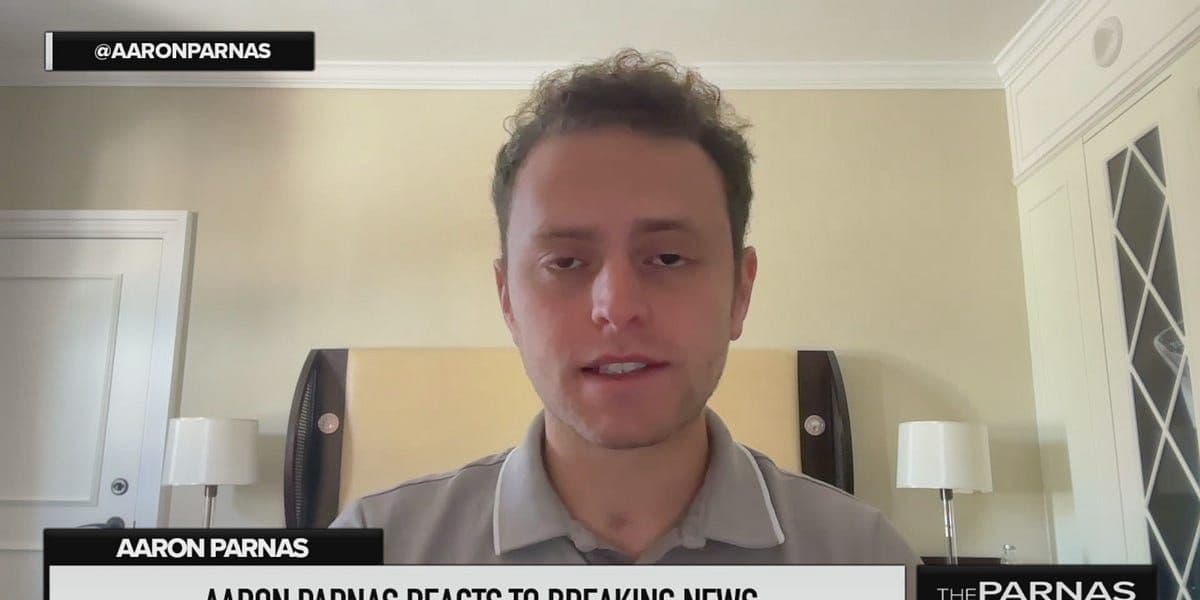
We have major breaking news this afternoon. First: it’s now official — in a virtually unheard-of display of unity, the House of Representatives has unanimously voted to release the Epstein files. Second: a Trump-appointed judge in Texas has delivered a bombshell ruling, blocking Texas Republicans from using their gerrymandered maps in 2026. And third: in the Oval Office, Trump just openly undercut American intelligence, insisting the Saudi Crown Prince had no role in the murder of Jamal Khashoggi. An absolutely explosive past hour.
Before I continue, I want to say thank you, truly, for standing with me as we fight for this and for the truth. As a journalist, I’ve faced real attempts to silence me. They never wanted these stories exposed, but together we broke through. We reached tens of millions. And this is only the beginning. If you can, subscribe to help me keep building this work and pushing forward.
First: in a rare display of complete bipartisan unity, the House of Representatives has unanimously voted to advance legislation that could release the long-hidden Epstein files—documents survivors have fought for years to bring into the light.
Survivors stood before the American public today and demanded answers that institutions repeatedly failed to provide. Their courage and persistence have pushed this moment into reality. For months, they faced bureaucratic stonewalling and an administration slow to act. Today’s vote does not erase those failures, but it represents a concrete step toward long- overdue transparency.
But this is not the finish line. The bill now moves to the Senate, where lawmakers may attempt to amend it. Any changes would kick the legislation back to the House, potentially delaying the process. Still, early signals from key Republican senators suggest they are open—or even supportive—of advancing it.
If the Senate passes the bill, it heads to the White House. President Donald Trump has stated he intends to sign it. Should that occur, the law would finally exist to allow the release of some of the most sought-after documents in modern American history.
Yet even with unanimous House support, deep skepticism remains. Will the public ever see the full, unredacted files? The President’s recent shift in tone introduces additional uncertainty: is it a simple acknowledgment of political reality, or a strategic move to influence what ultimately becomes public through the redaction process?
After decades of eroded trust surrounding the Epstein case, both possibilities are being discussed openly.
Second, in a dramatic legal development, a panel of federal judges has barred Texas from using its newly redrawn 2025 congressional map—ordering the state to revert to its 2021 boundaries for the 2026 elections.
Judge Jerry Brown, a Trump appointee, issued the ruling:
“Claiming that the 2025 Map is racially discriminatory, six groups of Plaintiffs ask the Court to preliminarily enjoin the State from using the 2025 Map for the 2026 elections. For the reasons explained below, the Court PRELIMINARILY ENJOINS the State from using the 2025 Map. The Court ORDERS that the 2026 congressional election in Texas shall proceed under the map enacted in 2021.”
This is a major blow to Texas Republicans, whose map had been widely criticized as one of the most aggressive partisan gerrymanders in the country. The ruling immediately reshapes the political landscape for 2026 and could set the stage for further litigation with national implications. Read the order here.
Third, in the Oval Office today, President Trump publicly contradicted U.S. intelligence assessments regarding the 2018 murder of journalist Jamal Khashoggi—one of the defining foreign-policy rifts between Washington and Riyadh in recent years.
Sitting beside Saudi Crown Prince Mohammed bin Salman (MBS), Trump described Khashoggi as “extremely controversial” and said “a lot of people didn’t like” him. The remarks directly clash with the 2021 U.S. intelligence report concluding that MBS approved the operation to “capture or kill” Khashoggi.
Saudi officials have long rejected the U.S. findings, calling them a “negative, false and unacceptable assessment.”
MBS responded:
“It’s really painful to hear anyone losing his life for no real purpose or not in a legal way. We did all the right steps of investigation in Saudi Arabia. And we’ve improved our system to be sure nothing like that happens again.”
The exchange underscores a sharp reversal from U.S. intelligence conclusions and signals a major tonal shift in the administration’s posture toward Saudi Arabia.