


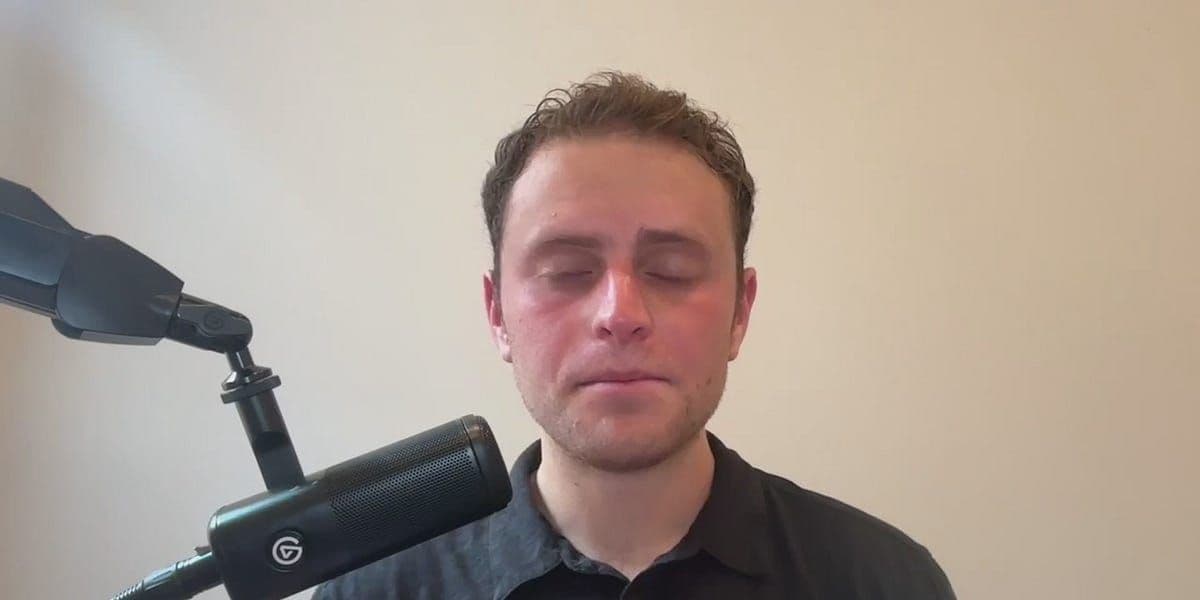
I hope everyone is having an amazing afternoon! This morning, I interviewed Jess Michaels, a survivor of Jeffrey Epstein’s horrific crimes. Please watch it and let me know what you think.
That can only happen because of you. There’s no corporate backing behind this work — no legal team or PR safety net. It’s just me, committed to the craft because I believe journalism still matters. I don’t write to game algorithms or follow fleeting trends. I report, research, and share because holding power to account is vital.
If you believe in the importance of independent journalism — if truth still matters to you — I invite you to support this work by subscribing.
Now, let’s get to the news.
- Vice President Kamala Harris, in an exclusive given to me, announced that she will not be running for Governor of California. Harris left the door open for a possible Presidential run in 2028 or in the future.
- The U.S. was placed on a global rights watchlist by Civicus for “sustained attacks on civic freedoms” under the Trump administration, citing militarized protest crackdowns, press restrictions, and criminalization of pro-Palestinian advocacy; the U.S. was downgraded to a “narrowed” civic space rating, putting it alongside countries like El Salvador and Kenya
- Texas Republicans unveiled a new congressional map that could net them up to five additional House seats, prompting backlash from Democrats who called it a racially discriminatory power grab; the redistricting, pushed by Gov. Greg Abbott and Donald Trump, consolidates Democratic districts and alters boundaries in areas with growing Hispanic populations, sparking threats of legal challenges and national mobilization.
- Vice President JD Vance may have screwed over efforts to gerrymander Texas by putting out a tweet that has since been deleted:
- High Noon recalled vodka seltzers mislabeled as Celsius energy drinks, warning of unintentional alcohol consumption; no illnesses or adverse events reported, per the FDA and Bloomberg.
- Senate GOP leader John Thune rejected Donald Trump’s call to scrap the “blue slip” tradition—a Senate custom giving home-state senators input on judicial and US attorney nominees—despite Trump’s push to expedite confirmations; Thune and other Republicans, including Chuck Grassley and John Kennedy, defended the bipartisan practice, calling Trump’s demand a “needless fight” and warning of political payback if the process is abandoned.
- FDA’s top vaccine official Vinay Prasad stepped down after less than four months, amid bipartisan criticism and controversy over his regulatory decisions and past opposition to Covid-19 mandates; the Trump administration gave no official reason, but analysts and reports suggest his tenure unsettled both political and biotech sectors, with markets reacting positively to his departure.
- The U.S. Federal Reserve voted to keep interest rates steady at 4.25–4.5%, despite criticism from Donald Trump and dissent from two governors, marking the first multi-governor opposition since 1993; the Fed cited moderate economic growth, low unemployment, and still-elevated inflation as reasons for holding the rate.
- Former CIA officer Susan Miller refuted Tulsi Gabbard’s accusations that Barack Obama led a “treasonous conspiracy” to fabricate Russian election interference findings against Donald Trump, calling Gabbard’s claims false, misinformed, and politically motivated; Miller defended her team’s intelligence work as based on verified sources and denied using the Steele dossier in their report.
- Donald Trump announced a 25% tariff plus an unspecified penalty on Indian goods, citing India’s arms and energy ties with Russia during the Ukraine war; while calling India a “friend,” Trump criticized its trade barriers and deficit with the U.S., escalating global trade tensions ahead of his August 1 deadline for deals, with India among several nations still negotiating.
- Trump calls Missouri Senator Josh Hawley a second-tier senator over stock trading ban spat.
- Brazilian President Lula da Silva pushed back against Donald Trump’s planned 50% tariffs, warning of a “lose-lose” scenario as the U.S. cites Bolsonaro-related tensions; Lula emphasized Brazil’s sovereignty, openness to economic negotiation, and rejection of Trump’s pressure over judicial matters, while polls show domestic support for Lula rising amid the looming trade clash.
- The Trump administration froze $108M in federal research funding to Duke University, alleging racial discrimination in hiring and admissions that violate the Civil Rights Act and Affordable Care Act; Duke was ordered to end any race-based advantages and create a government-approved oversight panel, part of a broader push by the administration to reshape higher education policies through funding pressure.
- Shane Tamura, the gunman in the Manhattan skyscraper mass shooting, built the AR-15-style rifle himself, authorities said, killing four and injuring one at the NFL headquarters before taking his own life; Tamura, a former Las Vegas casino security worker with mental health issues and a note referencing CTE, traveled cross-country to target the NFL over alleged brain injury cover-ups but mistakenly entered the wrong office.
- Danville, Virginia Councilman Lee Vogler was set on fire in a targeted attack at his workplace by suspect Shotsie Michael Buck Hayes, who doused him in gasoline and ignited it; police say the assault was personal, not political, and Vogler—conscious and hospitalized—is being treated for burns, as authorities investigate and charges are pending.
- The UN held emergency talks over soaring accommodation costs for Cop30 in Belém, Brazil, amid fears that high hotel rates—up to $700 per night—could exclude poorer nations and civil society from the climate summit; Brazil promised to address the issue, including adding cruise ships and capped rates, but concerns persist that Cop30 may become the most inaccessible in recent history.
- Twelve Democratic members of Congress have filed a lawsuit against ICE, challenging its new restrictions on lawmakers visiting detention facilities, arguing the policy violates their oversight responsibilities and constitutional rights.
- Brown University reached a deal with the Trump administration to restore federal research funding, agreeing to pay $50 million over 10 years to state workforce development programs without admitting wrongdoing, and with assurances that the U.S. cannot dictate its curriculum or academic speech.
- A new Washington Post poll shows only 16% of Americans approve of Trump's handling of the Epstein files, while 58% disapprove—including 63% of Independents and 24% of Republicans.
Good news:
- Mexico City’s Taquería El Califa de León became the first taco stand ever to earn a Michelin Star, recognized for its simplicity and quality with just four menu items, standout tortillas, and the signature Gaonera taco; chef Arturo Rivera Martínez’s minimalist approach highlights Mexico’s rich culinary tradition in the country’s first-ever Michelin Guide.
- The ancestral home of Harley-Davidson co-founder William C. Davidson was saved from demolition after devoted bikers and the Harley-Davidson Company raised over £300,000 to preserve the Scottish cottage; the restored home, once at risk of being sold to developers, will now be protected as a historic site celebrating the brand’s legacy.
- A painting bought for £150 at a London estate sale was revealed to be an original Salvador Dalí, titled Vecchio Sultano, from a 1966 Arabian Nights series, and is now expected to sell for up to $37,000 at Cheffins Fine Art; the buyer verified its authenticity through Sotheby’s records and Dalí scholarship after spotting it at a low-profile auction.
See you in the morning.
— Aaron
Loading comments...