


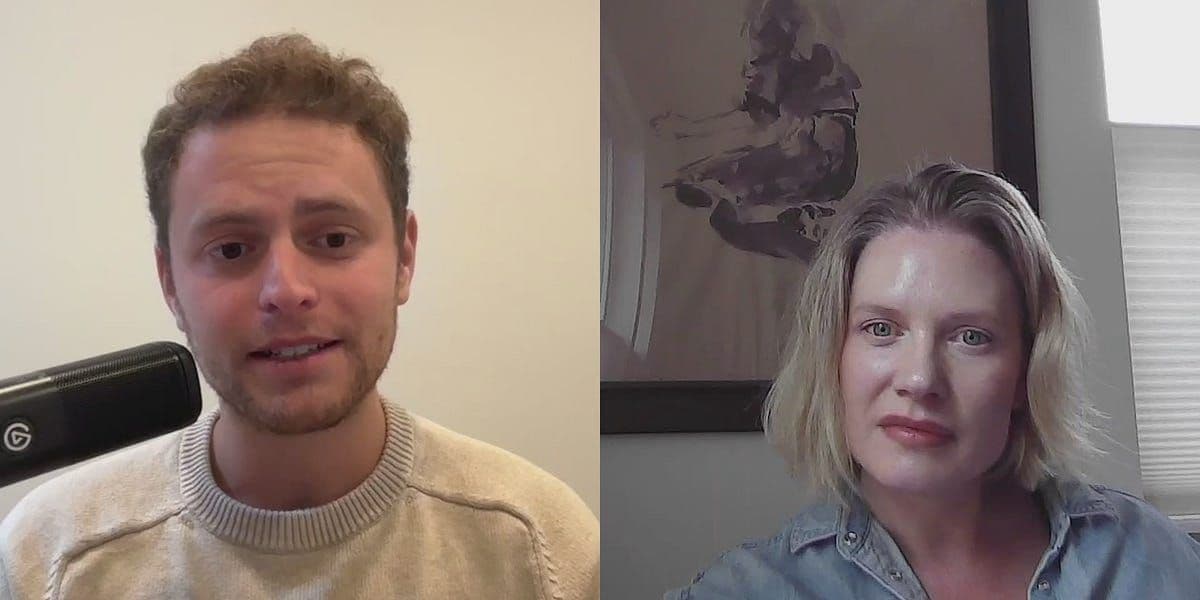
The news you missed is below, but this afternoon, I wanted to start off by talking about today’s interview. Today, I had the profound opportunity to sit down with Marjike Chartouni, another survivor of Jeffrey Epstein’s horrific crimes. I want to uplift and honor her story—a story that reflects not only her own resilience, but also the strength of countless women whose voices were silenced for far too long.
If you haven’t already, I ask you to subscribe. The White House wants me to stop focusing on these stories. I won’t. My reporting is not funded by billionaires or corporations—it’s powered by readers who care about truth. Every subscription helps me keep doing this work independently, without compromise, and without fear.
Subscribe
Marjike was just 20 years old when her life was violently altered. A young model from a small town in Alaska, she had recently moved to Manhattan chasing the same dream so many hopefuls bring to New York City: the chance to build a better future. It was through a trusted friend that she was introduced to Epstein. The friend casually suggested she meet “a friend of hers”—a vague invitation that, as Marjike recalls, “could be interpreted in so many different ways.” What she encountered instead was a predator hiding behind wealth, power, and influence.
At the time, Epstein’s sprawling townhouse near Central Park was infamous in certain circles, yet to young women new to the city, it appeared as just another world of opportunity. Marjike, along with Jane Doe and other young models, was manipulated into what they were told would be massage work. Instead, they were forced into Epstein’s cycle of sexual exploitation. Marjike was sexually assaulted in 2000, just months after her move to New York, leaving scars that would follow her into adulthood.
Now a mother of two living in Washington State, Marjike is fighting back—not only for her own healing, but also for accountability and justice. In speaking out, she insists that the conversation must remain focused on the survivors, rather than allowing the spotlight to fall back onto the perpetrators. She has been outspoken about the way the justice system and the media too often center on the abusers.
When asked about the notion that figures like Ghislaine Maxwell might benefit from political discussions of pardons, Marjike did not mince words. To her, the idea is an insult to survivors everywhere. She emphasized that Maxwell is not a reliable narrator for her story, pointing to the danger of letting the accounts of convicted criminals overshadow the testimony of the women who were abused.
Marjike’s voice is unshakable. She represents the determination of survivors who refuse to let history be rewritten by those who once held the power. Her story is a reminder that behind every headline about Epstein and his enablers are real women—young women whose lives were derailed, but who are now standing up, speaking out, and demanding justice.
Here’s the rest of the news you missed today:
- President Trump escalated rhetoric against Chicago by threatening to unleash the “Department of WAR,” posting an “Apocalypse Now”-style Truth Social meme saying “I love the smell of deportations in the morning” as 300 federal agents prepare expanded immigration raids from a naval base outside the city.
- Illinois Gov. JB Pritzker blasted the remarks as “not a joke” and vowed legal action against any unlawful raids, while protests continue and local leaders warn that a National Guard deployment could devastate businesses and coincide with Mexican independence celebrations.
- Despite Donald Trump labeling Chicago “the most dangerous city in the world” and threatening to send in troops, crime data shows the four U.S. cities with the highest murder rates in 2024 were actually Jackson, MS (78.7 per 100k), Birmingham, AL (58.8), St. Louis, MO (54.1), and Memphis, TN (40.6)—all located in Republican-led states—while overall homicide and violent crime rates have been falling nationwide, with major blue cities like Chicago, Baltimore, and Washington DC seeing historic declines.
- The U.S. Department of Justice urged a federal judge to block NBC News’ request to unseal the names of two Jeffrey Epstein associates who received $100,000 and $250,000 in 2018, shortly after the Miami Herald published critical stories about his 2008 Florida plea deal.
- Thousands marched in Washington, D.C. against President Trump’s deployment of over 2,000 National Guard troops from six Republican-led states, even as Justice Department data shows violent crime at a 30-year low; D.C. Attorney General Brian Schwalb has sued to block the deployment as unconstitutional, while Trump tightened federal control over local police and ICE patrols, prompting critics to call it authoritarian “occupation,” though Mayor Muriel Bowser has noted recent crime declines and some residents support the troops in high-crime areas.
- When critics accused the August U.S. drone strike on a vessel carrying alleged Venezuelan cartel members of potentially being a war crime, VP JD Vance dismissed the charge outright—stating, “I don’t give a st what you call it”—and defended the strike as the “highest and best use” of U.S. military force to combat drug trafficking.**
- The LAPD ended its temporary protection detail for former Vice President Kamala Harris after internal criticism that officers were being diverted from crime-fighting, following President Trump’s unprecedented revocation of her Secret Service protection last week; while President Biden had extended her coverage beyond the traditional six months, police unions argued Harris, a wealthy Brentwood resident, could afford private security instead of relying on city resources.
- A SmartAsset study ranked Los Angeles the “second safest” large city in the U.S., just behind San Jose, based on metrics like violent and property crime, traffic fatalities, and overdose deaths; L.A. posted the ninth-lowest rates of violent and property crime among the 50 largest cities, along with relatively low traffic death and overdose rates, while Memphis, Albuquerque, and Detroit ranked as the most unsafe.
See you in the morning.
— Aaron